
Selecting and Qualifying Licensed and Insured Coral Springs Rental Property Vendors
Florida PMServices • December 27, 2019

Who do you call when you have an emergency plumbing need in the middle of the night?
It’s important that you have a list of preferred rental property vendors, especially if you’re not working with a Coral Springs property management company. You’ll need to establish relationships with vendors and contractors before you need them so you can count on reliable and cost-effective service.
Today, we’re sharing a few tips on how to find and qualify the vendors who work at your rental property.
Work with Licensed and Insured Professionals
It’s tempting to hire your Uncle Joe to fix a sink or to pick up a guy you met at the Home Depot who says he knows how to paint houses. This can seem like a great way to save money, but it’s a terrible idea.
You need to work with licensed and insured professionals only. Not only does it ensure a high standard of workmanship, it also protects you against liability. If an uninsured worker is on a ladder repairing your roof and gets electrocuted by a nearby wire or falls off that ladder, you could be held responsible. Not only will you be responsible for medical bills, but additional damages that might be assessed through a lawsuit or claim against your own insurance policy. Don’t take chances. Insist on seeing proof of licensure and worker’s compensation insurance.
Screen Potential Coral Springs Rental Property Vendors
You screen your tenants
carefully because you want to protect your property and be sure you’re putting a high quality resident into it. This is the same reason to screen your vendors. You have to make sure they will do good work and provide a high standard of customer service to your tenants. These vendors represent you when they’re dealing with your tenants, so if they’re rude or inconsiderate or messy, your tenants will have an unfavorable impression of how you handle maintenance and repairs.
Talk to current and former customers and investigate their online reviews. Visit their website and see if they have any guarantees. Take your time getting to know your potential vendors and make sure you and your property will be a priority for them, whether you have a routine repair or an emergency.
Consider Professional Property Management
Working with a professional Coral Springs property management company comes with a number of benefits, including the access to high quality vendors. Management companies have a lot of advantages over individual landlords. We provide a larger volume of business to vendors and contractors, so we can usually negotiate lower rates, which we pass onto our owners. We also know that our needs come first; when we need a plumber or an electrician or a cleaner or a landscaper, we don’t have to wait in line or compete with other customers for their time. We work with vendors who are responsive, great at what they do, and fairly priced. We do all the license and insurance checking for you.
If you have any questions about finding a great vendor or you’d like to learn more about our management services, please contact us
at Florida Property Management Services.
Share this post
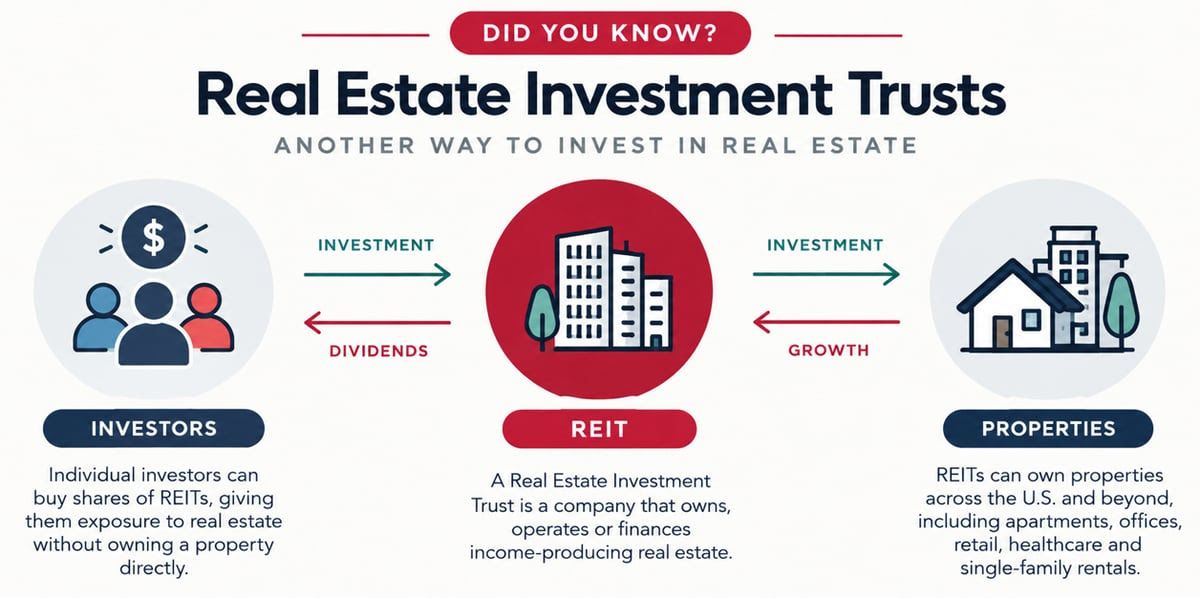
What is a REIT? A Real Estate Investment Trust is a company that owns, operates, or finances income-producing real estate. Some REITs specialize in single-family rental homes. Who invests in it, and when? Individual investors can buy shares of REITs. They can be an option for investors who want real estate exposure without the responsibilities of being a landlord. Where can REITs operate? REITs can own properties across the U.S. and beyond, including apartments, offices, retail properties, and single-family rentals Why do investors use REITs? They can provide diversification and potential income while being easier to buy and sell than physical real estate. The tradeoff is that investors have less control and REIT values can fluctuate with the stock market. Investor Takeaway: REITs offer a more hands-off way to invest in real estate, but they are different from owning a rental property directly. They may also complement a portfolio of physical properties.

Legal Update from the Law Offices of Heist, Weisse & Wolk, PLLC Phone: 1-800-253-842

What is it? A cost segregation study looks at the different parts of a rental property to see which ones can be depreciated faster. This can allow investors to take some deductions sooner instead of spreading them out over the standard 27.5 years. Who uses it? It’s mainly used by real estate investors and property owners who want to claim larger depreciation deductions sooner on their rental properties. A qualified tax professional or cost segregation specialist typically performs the study. Where does it apply? Cost segregation can be used on residential rental properties, including single-family rentals, although whether it makes financial sense depends on the property and the investor's tax situation. The IRS specifically provides guidance for cost segregation studies involving residential rental property. When should investors consider it? It is often considered when purchasing, constructing, or making significant improvements to a rental property. Investors can also look at existing properties, but the potential benefit depends on the property's cost, improvements, and tax circumstances. Why does it matter? The goal is to potentially move some depreciation deductions into earlier years, which can reduce taxable income sooner and potentially improve near-term cash flow. It doesn't create new value in the property, it changes when certain costs may be deducted for tax purposes. Investor Takeaway: A cost segregation study can be worth exploring for investors with higher-value rental properties or significant improvements, but the potential tax benefit varies from property to property. It is recommended to always work with a qualified tax professional to determine whether a study makes sense for your situation.