
Population trends in South-East Florida

Gaston Reboredo • November 25, 2025

A decade of growth, change, and new movers
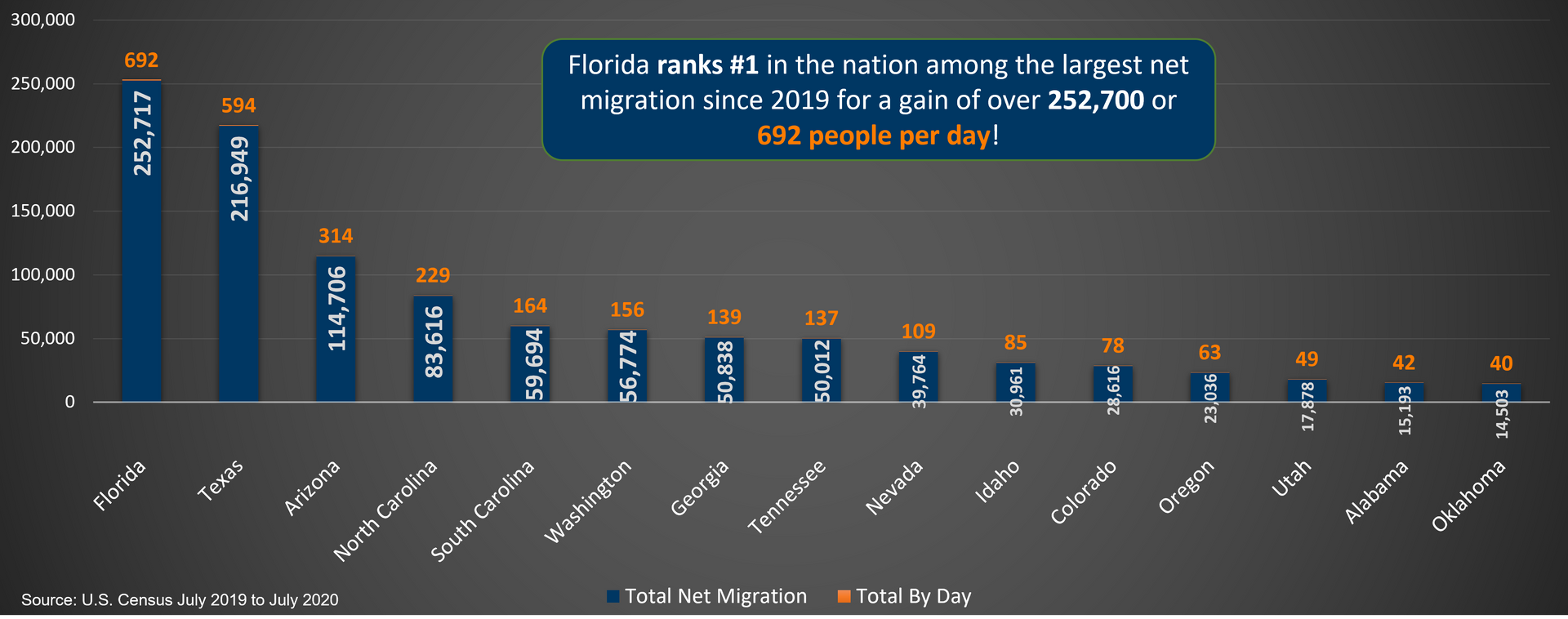
Over the past ten years South-East Florida — the tri-county area of Miami-Dade, Broward and Palm Beach — has quietly transformed into one of the nation’s fastest-growing and most dynamic metropolitan regions. Growth since the mid-2010s has been driven not by births but by movement: first a dramatic surge of domestic in-migration during and immediately after the pandemic, and more recently a steadier mix of international arrivals and selective domestic relocation. The result is faster population growth than the national average, shifting demographics, and important implications for housing, labor and infrastructure planning across the region.


How much did the population change?


County and regional estimates show clear gains. Statewide, Florida added hundreds of thousands of residents each year through much of the last decade; national and state estimates put Florida’s population increases in recent years in the hundreds of thousands annually, and the state surpassed 23 million residents in the mid-2020s. At the regional level, University of Florida and FIU research show that South-East Florida’s tri-county population rose from about 6.14 million in 2020 to over 6.27 million by 2023 (Bureau of Economic & Business Research/UF BEBR), and more recent 2024 estimates place the tri-county population nearer 6.45 million — a roughly 1.9% year-over-year increase for the metro area in the most recent vintage.


Looking at individual counties, the U.S. Census Bureau’s Vintage 2024 estimates show strong year-over-year gains for 2023–24: Miami-Dade (+2.3%), Broward (+1.7%) and Palm Beach (+1.6%). In Miami-Dade the increase was fueled largely by international migration plus a modest natural increase, while Broward and Palm Beach saw meaningful contributions from domestic movers as well as international arrivals.


Who’s moving in — and where are they coming from?


Two migration streams stand out over the last decade: international immigrants and Americans relocating from other states. International migration has become critical to Florida’s growth. National analyses and Census reporting show that in the most recent yearly estimates nearly half of Florida’s new residents arrived from abroad, reversing years when domestic moves dominated growth patterns. South Florida — especially Miami-Dade — has been a principal beneficiary of that international flow.

From a domestic perspective, the early-pandemic years (2020–22) saw outsized flows from higher-cost, higher-tax Northeastern and West Coast metros — New York City repeatedly ranks among the largest single-city contributors of new Floridians. That movement cooled after 2022 and has continued to moderate; by 2024 domestic net gains into Florida had declined from pandemic peaks, even as overall population growth remained positive thanks to international arrivals. In plain terms: the post-pandemic “rush south” eased, and new growth is now a blend of continued international arrivals and selective, economically motivated domestic migration.


Demographic shape: older, but diversifying


Florida’s reputation as a retirement destination remains true: the state has one of the highest shares of residents age 65+ in the country, and a substantial portion of in-migrants are retirees seeking climate, taxes, and lifestyle benefits. Yet the inflow of international immigrants — many of them younger working-age adults — is reshaping the age profile in pockets of the region, especially in immigrant-dense neighborhoods in Miami-Dade. The net effect is greater age-diversity across the metro: older suburban inflows in some communities, and younger, often immigrant labor forces in urban centers and service sectors.


Rapid population growth compresses housing supply and puts upward pressure on rents and home prices — a trend South-East Florida has experienced acutely in the last five years. The mixture of high-income domestic arrivals (a not-insignificant share during the early pandemic years) together with lower-wage international newcomers has widened housing demand at both ends of the market, increasing the need for both affordable workforce housing and higher-end inventory. Local planning documents and economic reports note rising demand for infrastructure, transit and social services to accommodate the growing and more diverse population.


What changed over the last 10 years — the big takeaways


  1. Scale and speed: South-East Florida grew faster than many U.S. metros, with multi-year gains that added hundreds of thousands of residents to the tri-county area since 2015. Bureau of Economic and Business Research
  2. Migration mix shifted: Early-pandemic domestic migration gave South Florida a big boost; since then, international migration has taken on a larger share of total growth, keeping population gains positive even as domestic flows cooled.
  3. Demographic complexity: The region is simultaneously aging in many suburban locales and gaining younger immigrants in urban neighborhoods, producing a more heterogeneous population with different needs. Brookings Institution
  4. Policy pressure points: Housing affordability, transportation, and public services are the clearest near-term challenges — local governments are grappling with how to match infrastructure to the new scale and speed of growth.


Looking forward


Expect the next several years to bring steadier — not explosive — growth. International migration will likely remain a principal engine, while domestic patterns will be shaped by economic conditions, remote-work policies, and affordability dynamics in the sending metros. For planners, investors and community leaders in South-East Florida, the priorities are clear: build more diverse housing, expand transit and utilities, and plan for a population that is both older in sections and younger and more international in others


Share this post

November 25, 2025
Please click the link below for a very interesting video from Attorney Harry heist from the Law Offices of Heist, Weisse & Wolk, PLLC LINK TO VIDEO 
By Florida PMServices May 18, 2025
Keeping up with advances in technology
By Florida PMServices October 13, 2024
In the world of property management, insurance is one of the critical elements that ensure both the landlord’s and the property management company's protection from potential risks and liabilities. One of the common practices in property management is for the management company to be named as an "additional insured" on the landlord’s liability insurance policy. But what exactly does this mean, and what requirements must be met for a property management company to be added as an additional insured? This blog will delve into what it means to be an additional insured, the benefits and coverages it provides, and the steps involved for a property management company to be included in a landlord’s liability insurance. What is an Additional Insured? An "additional insured" is a person or entity that is covered under someone else's insurance policy. In the context of property management, this means that the property management company is protected under the landlord's insurance policy in case of claims or lawsuits related to the management of the property. By being named as an additional insured, the property management company receives many of the same protections as the landlord, particularly when it comes to liability claims. For instance, if a tenant or visitor is injured on the property and decides to file a lawsuit, both the landlord and the property management company could be named in the lawsuit. If the property management company is listed as an additional insured, the insurance policy will provide coverage for both parties in defending against the claim, thus reducing the property manager’s potential exposure to financial loss. Why Should a Property Management Company Be Added as Additional Insured? Adding a property management company as an additional insured is a common industry practice and offers several advantages for both landlords and property managers. Protection Against Liability Claims: One of the primary reasons to add a property management company as an additional insured is to protect them from potential liability claims. Since property managers are responsible for handling various aspects of the property, from repairs and maintenance to tenant relations, they are at risk of being named in lawsuits. As an additional insured, the property management company is shielded from these risks and can rely on the landlord’s insurance policy to handle claims related to their activities. Risk Mitigation: Having a property management company named as an additional insured helps mitigate risks for both the landlord and the property manager. It ensures that there is adequate coverage for potential claims that could arise from the property’s day-to-day management. This reduces the likelihood of disputes between landlords and property managers over who is liable for a particular claim, streamlining the process for addressing legal matters. Cost Savings: If a property management company is added as an additional insured, they do not need to carry separate liability insurance for that specific property. This can result in cost savings for the management company, which can be passed on to landlords in the form of reduced management fees. Of course, property management companies must carry their own general liability and professional liability insurance policies but being named as additional insured on a landlord's liability policy avoids the need of carrying a liability policy for that specific property which results in savings of operating costs and therefore provides the abiity for the management company to pass on those savings to the landlord in the form of lower management fees. What Coverages are Provided When a Property Management Company is Named as Additional Insured? When a property management company is added as an additional insured, they receive coverage for a wide range of potential claims and liabilities, including: General Liability Coverage: This is the core coverage that a property management company benefits from as an additional insured. General liability insurance covers bodily injury and property damage that occurs on the rental property. For example, if a tenant trips and falls due to a poorly maintained stairway, and both the landlord and property management company are sued, the insurance policy will cover the costs of defending the lawsuit, as well as any potential settlements or judgments. Property Damage Claims : If damage occurs to a tenant’s property or personal belongings due to the negligence of the property manager (for instance, a leak that was not promptly repaired), the additional insured coverage can protect the management company from liability. Legal Defense Costs: In the event that a property management company is sued, the insurance policy will cover legal defense costs, including attorney fees, court costs, and any other related expenses. This is particularly important as legal fees can quickly add up, even if the property manager is ultimately not found liable. Errors and Omissions (E&O): In most cases E&O coverage is provided as a separate liability policy that is obtained by the property management company at no cost to the landlord Requirements for Adding a Property Management Company as Additional Insured  For a property management company to be added as an additional insured, several steps and requirements need to be met: Landlord Consent: The landlord must first agree to include the property management company as an additional insured on their insurance policy. This is typically negotiated as part of the property management agreement. It is in the best interest of both parties, as it ensures comprehensive coverage for any incidents that occur on the property. Endorsement: Adding a property management company as an additional insured usually requires an endorsement to be added to the landlord’s existing policy. This endorsement officially extends the coverage to include the management company. The landlord must request this endorsement from their insurance provider, and there may be a small fee associated with adding it. Policy Limits and Coverage Types: It is essential that the landlord’s policy has adequate limits and the right types of coverage. Property management companies should ensure that the policy includes sufficient general liability coverage, as well as coverage for property damage, bodily injury, and other risks specific to the management of rental properties. Verification and Documentation: Once the property management company is added as an additional insured, it is important to obtain a certificate of insurance (COI) from the landlord’s insurance provider. This document serves as proof that the management company is covered and can be kept on file for reference. Property managers should periodically verify that the coverage remains active and up-to-date, particularly when policies are renewed or if the landlord changes insurers. Adding a property management company as an additional insured on a landlord’s liability insurance policy is a crucial step in mitigating risks and ensuring comprehensive protection for both parties. By understanding what additional insured status means, what coverages it provides, and the steps involved in obtaining this coverage, property management companies can better protect themselves from potential liabilities and provide landlords with greater peace of mind. For landlords, including their property management company as an additional insured is a relatively simple process that can prevent costly legal battles and ensure seamless management of their rental properties. As with all aspects of property management, clear communication and well-defined agreements are key to protecting both parties and ensuring the long-term success of the property management relationship.
Show More